Pain Is Not a Gift: The Harm in Romanticizing Pain
Meaning
The broken bone theory arrives wrapped in a comforting message. You were chosen. Your suffering made you deeper. Here is why that framing deserves a much closer look.

Key points
- Suffering does not reliably make people stronger. Sometimes it takes things away.
- Post-traumatic growth is real for some people, but it is not a promise or a plan.
- “You were chosen for this” can quietly become a reason not to ask for help.
- Wanting a visible injury so your pain gets believed is more common than people admit.
- You do not have to earn your pain a meaning for it to count.
If you have thought about hurting yourself, or wished for an injury so people would take your pain seriously, please talk to someone today. Call or text 988 in the United States. Text HOME to 741741. Our resources page has more.
The Sharpest Response to This Trend
Of everything written about the broken bone theory online, one reply keeps coming back. Different people, different words, same point.
Trauma does not give you strength or creativity. Do not romanticize pain.
A frequently repeated response to the theory online
I think that response is right, and I want to take it seriously rather than talk around it.
The broken bone theory does not only claim that some people escape fractures. It adds a second layer. It says the trade was meaningful. You were spared one thing because you were built to carry another. Somebody, or something, decided this.
That second layer is where the trouble starts.
What the Research Actually Says
You have probably heard that hardship makes people stronger. There is a real idea behind it, and it is often misread.
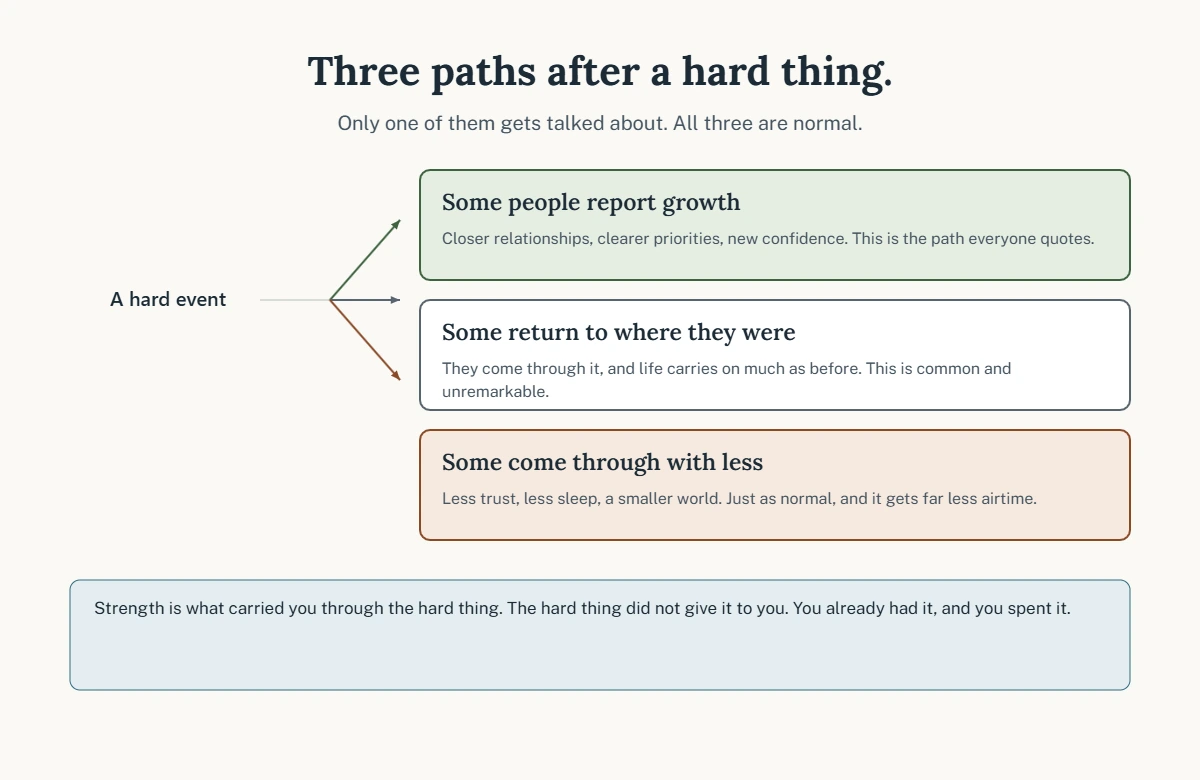
A term for positive changes some people report after a major crisis. Not everyone who lives through trauma experiences it. Common examples include closer relationships, a clearer sense of what matters, and new confidence in their own resilience.
Three things are worth knowing about it.
It describes. It does not promise. Researchers noticed that some people report these changes. That is an observation about what sometimes happens, not a rule about what will happen to you.
Plenty of people do not experience it. Many come through hard years with less capacity than they had before. Less trust. Less sleep. A smaller world. That outcome is just as normal and it gets far less airtime.
Growth is not caused by the suffering. When people do grow, it usually comes from what they did afterwards. The support they found. The work they put in. The time they were given. The event did not hand them anything.
Strength is what carried you through the hard thing. The hard thing did not give it to you. You already had it, and you spent it.
Why “You Were Chosen” Causes Harm
It sounds kind. In practice it does three things I see cause real damage.
It turns pain into a job you must do well
If your suffering has a purpose, then struggling with it starts to feel like failing at it. People end up ashamed of finding a hard thing hard. That shame is heavy, and it is completely unnecessary.
It gives you a reason not to ask for help
This is the one that worries me most as a clinician.
If you believe you were built to carry this, then asking for help looks like weakness, or like refusing the assignment. I have met many people who waited years because some version of this idea told them their job was to endure quietly.
Nothing about that is noble. It is just time lost.
It quietly blames people
Follow the logic and it becomes uncomfortable. If pain is handed out for a reason, then the people with the most pain were selected for it. That leads somewhere cruel, usually without anyone meaning it to.
The Thing People Rarely Say Out Loud
In public discussions of this trend, more than one person has admitted they wished they could break a bone. Not because they want to be hurt, but because then the pain would finally be visible. Someone would see it. Someone would believe them.
If you have had that thought, I want to say two things clearly.
First, it makes sense. You are not strange and you are not broken for thinking it. It is usually a wish to be believed, not a wish to be injured.
Second, it is worth telling someone about. A doctor, a therapist, a crisis line, a friend. Not because the thought means something is deeply wrong with you, but because it means you are carrying something without enough support, and that is fixable.
You should not have to produce evidence of your pain before anyone takes it seriously. That is a problem with how we respond to suffering, not a problem with you.
Romanticizing Pain Has a Name
The pressure to stay upbeat about something genuinely painful is often called toxic positivity.
It sounds like this. Everything happens for a reason. At least you learned something. Other people have it worse. Stay positive.
None of those are said unkindly. They still land badly, because they ask the person hurting to manage your discomfort instead of their own. The usual result is that they stop telling you things.
What Actually Helps
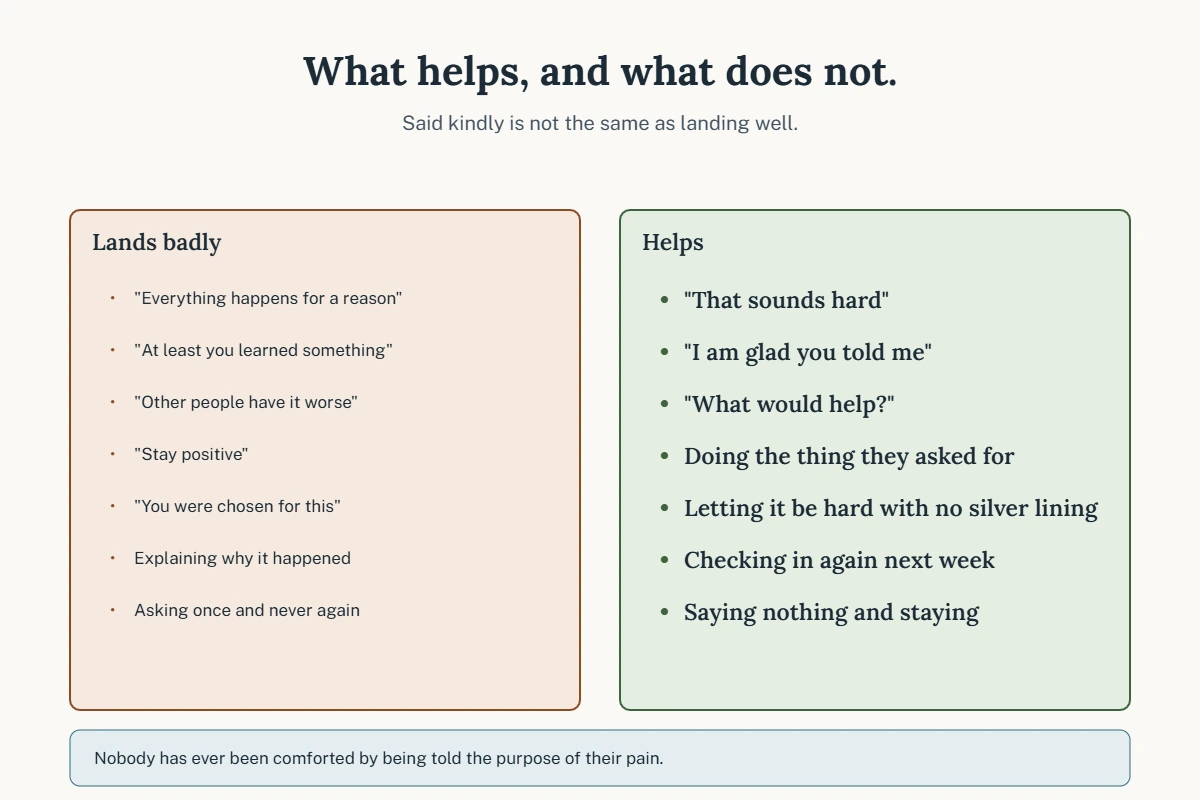
If you are the one struggling:
- Let the hard thing be hard. You do not owe it a silver lining.
- Tell one person, plainly, without softening it.
- Notice the belief that you should be able to handle this alone, and treat it as a symptom rather than a fact.
- Get an assessment if it has been weeks rather than days. Early help is easier than late help.
If you are supporting someone:
- Say that it sounds hard, and that you are glad they told you.
- Ask what would help. Then do that thing, not the thing you assumed.
- Do not explain why it happened. Nobody has ever been comforted by being told the purpose of their pain.
- Check in again next week. Most people only get asked once.
What to Keep From the Theory
I do not want to leave you with nothing, because there is something here worth keeping.
Strip away the trade, the protection and the chosen part. What remains is a straightforward observation. Pain with no visible sign is still pain, and it is easy for everyone to miss, including you.
That is true, and it is useful. It does not require anyone to have planned your suffering. It just means that what you carry is real, whether or not anyone can see it, and that help exists for it.
You do not need a cast to qualify. You never did.
For more on why this idea lands so hard, read the psychology behind the broken bone theory. For the evidence, see is the broken bone theory real.
Questions People Ask
Does trauma make you stronger?
Not reliably. Some people report growth after hard events. Many come through with less capacity, not more. Strength is what carried someone through. The event did not hand it to them.
What is post-traumatic growth?
It describes positive change some people report after a major crisis, such as closer relationships or clearer priorities. It is a description of what sometimes happens, not a promise, and not a reason to welcome suffering.
What is toxic positivity?
It is the pressure to stay upbeat about something genuinely painful. It sounds like “everything happens for a reason” and usually leaves the person hurting feeling unheard.
Is it normal to wish you had a visible injury?
It is more common than people expect, and it usually means someone wants their pain believed rather than wanting to be hurt. Tell a professional about it. It is a sign you need real support, not a metaphor.
What should I say to someone who is suffering?
Say it sounds hard and that you are glad they told you. Ask what would help. Skip the explanations about why it happened or what they are meant to learn.
Sources and Further Reading
- Psychology Today. When pain becomes purpose: trauma, growth and the search for meaning. psychologytoday.com
- National Institute of Mental Health. Coping with traumatic events. nimh.nih.gov
- 988 Suicide and Crisis Lifeline. 988lifeline.org
Sources last checked September 27, 2026.